

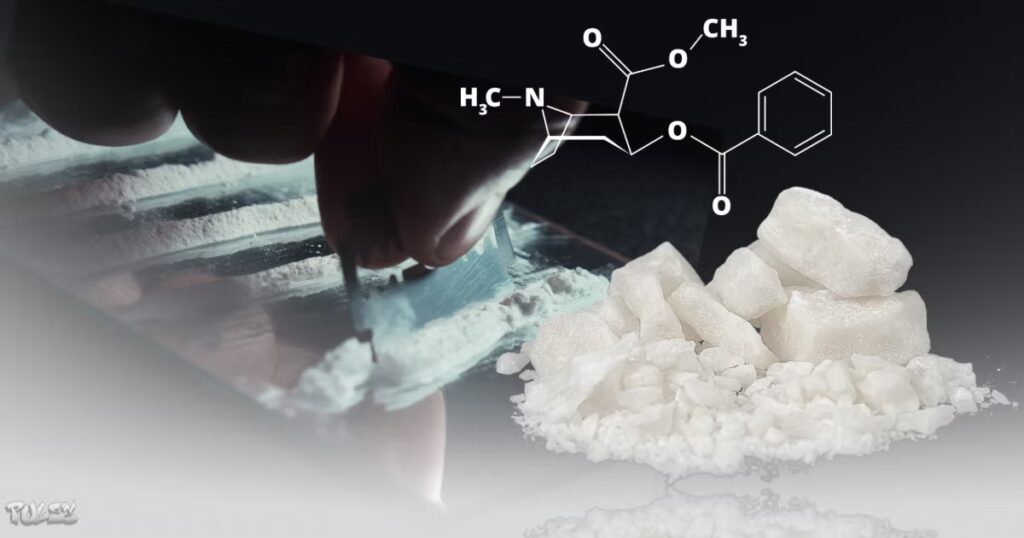
Powder cocaine has long been viewed through a bizarrely glamorous lens in pop culture, often painted as an expensive “party drug” for wealthy Wall Street executives and celebrities. In movies, characters who use it are often shown in luxury apartments or high-end clubs, treating it almost like a status symbol for the rich and successful.
Now, think about how the media handles crack cocaine. The term “crackhead” is frequently thrown around as a cheap and cruel punchline or used to portray desperation, poverty, and a reason for violent crime in inner cities.
These two stereotypes make it seem like we are talking about two completely different substances. But medically and chemically, powder cocaine and crack cocaine are essentially the same.
The Molecular Reality: Same Drug
To understand why the stigma surrounding crack is so deeply unjust, one must look at to science. At a molecular level, the active ingredient that alters brain chemistry is identical in both substances.
Powder cocaine is a salt that is scientifically known as cocaine hydrochloride. To turn powder cocaine into crack cocaine, it must be dissolved in a mixture of water and baking soda (or ammonia) and then boiled down until solid rocks form. This chemical process strips away the hydrochloride salt, leaving behind what is scientifically known as freebase cocaine.

As seen in the chemical diagram above, the core structures of freebase cocaine (crack) and cocaine hydrochloride (powder) are nearly identical.
However, when a person uses either drug, even that minor chemical difference vanishes:
- In the body: The baking soda in crack doesn’t change how the drug interacts with your brain cells. Your brain cannot tell if the chemical came from insufflation or inhalation.
- The intensity: Crack is smoked, which means it reaches the brain faster and creates a quicker, more intense high than snorting powder. However, the U.S. Sentencing Commission itself has noted that there is no fundamental pharmacological difference between how the two forms affect the human body.
Ultimately, treating crack as a fundamentally “worse” drug than powder cocaine makes no scientific sense. It is like claiming a liquid pain reliever is an entirely different drug than a pill form of the exact same medication—one might absorb a bit faster, but the core chemical entering your body is identical.
The 100-to-1 Disparity
Despite the science proving they are chemical twins, the American legal system treated them like entirely different monsters for decades.
The 1986 Anti-Drug Abuse Act
During the height of the media panic surrounding crack in the 1980s, Congress rushed to pass the Anti-Drug Abuse Act of 1986. This law created a massive legal double standard known as the 100-to-1 sentencing disparity.
Under this rule, if someone was caught with just 5 grams of crack cocaine, they automatically received a mandatory minimum sentence of 5 years in federal prison. To get that exact same 5-year prison sentence for powder cocaine, a person had to be caught with a whopping 500 grams!
Small Steps Toward Reform
Over time, policymakers realized how deeply flawed and unscientific this law was. In 2010, the Fair Sentencing Act was signed into law, which lowered the legal disparity from 100-to-1 down to 18-to-1. Later, the First Step Act of 2018 allowed people stuck in prison under the old 1980s rules to finally ask a judge to reduce their sentences.
While these changes are a step in the right direction, an 18-to-1 disparity is still a disparity. It means federal law still explicitly punishes one form of the exact same chemical far more harshly than the other.
Why the Disparity is Unfair (and Deeply Biased)
If the drugs are chemically identical, why did the law divide them so aggressively? The simple answer is: race and money.
Because powder cocaine is expensive, it was historically consumed by wealthier, predominantly white users. Crack, on the other hand, was cheaper to buy, making it more accessible in lower-income urban neighborhoods—which were primarily home to Black and Hispanic communities.
The result of this legal double standard was devastating. Instead of locking up high-level drug kingpins, the law overwhelmingly targeted low-level, minority offenders. According to data from advocacy organizations, even decades after these laws were formed, roughly 80% of federal crack cocaine defendants are Black, while the majority of powder cocaine users are white. This created a vicious cycle where substance use was treated as a glamorous party habit for one group, and a reason to tear apart families and destroy lives for another.
Time to Match the Law with Science
The stigma around crack isn’t based on chemistry; it was manufactured by media sensationalism and racially biased policy decisions. When one looks at the actual science, it becomes clear that continuing to punish crack users eighteen times harder than powder users is unjustifiable. Problematic substance use of any kind is a healthcare issue, not a scorecard to see who can be locked away the longest.
References
American Bar Association. (2021). Eliminating disparities in sentencing. https://www.americanbar.org/advocacy/governmental_legislative_work/publications/washingtonletter/july-2021-wl/equal-act-0721wl/
R Street Institute. (2021). The EQUAL Act and the federal cocaine sentencing disparity (Policy Sheet). https://www.rstreet.org/wp-content/uploads/2021/09/Final-Equal-Act-R-Sheet.pdf
The Sentencing Project. (2023). The EQUAL Act. https://www.sentencingproject.org/advocacy/get-involved/the-equal-act/
U.S. Sentencing Commission. (2015). 2015 report to the Congress: Impact of the Fair Sentencing Act of 2010. https://www.ussc.gov/research/congressional-reports/2015-report-congress-impact-fair-sentencing-act-2010